
The group behind the “What Happened to Hannaford?” is alleging the grocery store chain is charging lower-income shoppers more; the company denies the allegations.
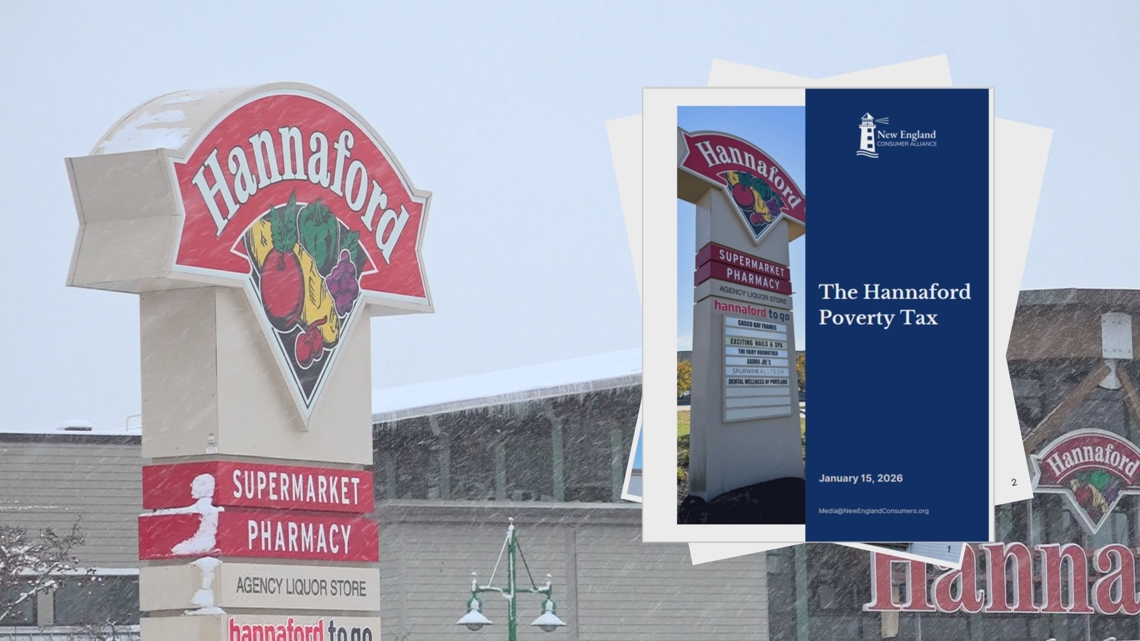
MAINE, USA — The group behind the “What Happened to Hannaford?” campaign has released a new report, scrutinizing one of Maine’s most recognizable grocery stores.
The report alleges that Hannaford sets prices higher in lower-income areas compared to higher-income ones. The grocery chain denies these claims, pointing to other reasons for the price discrepancies.
The New England Consumer Alliance published a report detailing its methodology and findings after investigating four Hannaford supermarkets located in Falmouth, Scarborough, Millinocket, and Machias.
New England Consumer Alliance looked specifically at these locations, the report says, based on income.
“We identified the lowest-income ZIP codes in the state that contain a Hannaford store and selected the two lowest-income eligible locations,” the report states. “The same process was used to identify and select the two highest-income ZIP codes.”
In Machias and Millinocket, the poverty rates are 16% and 21%, respectively, according to the report. In Falmouth and Scarborough, those same figures are 1.8% and 1.4%.
More than 100 items were originally indexed, says Taylor Warren. Warren is a spokesperson for the New England Consumer Alliance and the founder of Alliance’s parent group, The Center for Responsible Food Business.
Ultimately, the report is based on 45 items, which reportedly cost $31, or 25.11%, more in the lower income stores, in Millinocket and Machias, than the higher income stores.
NEWS CENTER Maine checked these numbers, using Hannaford’s “In Store” online feature. While some items had changed and others were not found at some or all of the four stores, the discrepancies between the high and low-income areas were about the same. Our analysis found the difference to be 20.04% or about $29.
“It’s not out of the question that Hannaford is just taking advantage of the situation,” said Warren. “We feel that they’re effectively taking advantage of what is a local monopoly in some areas where it’s rural, lower-income town that has no other grocery store. So, Hannaford can basically get away with charging more.”
As Warren claims, many Hannaford locations are the only option for tens of miles in Maine. However, there are sometimes other options in small towns, such as Lincoln.
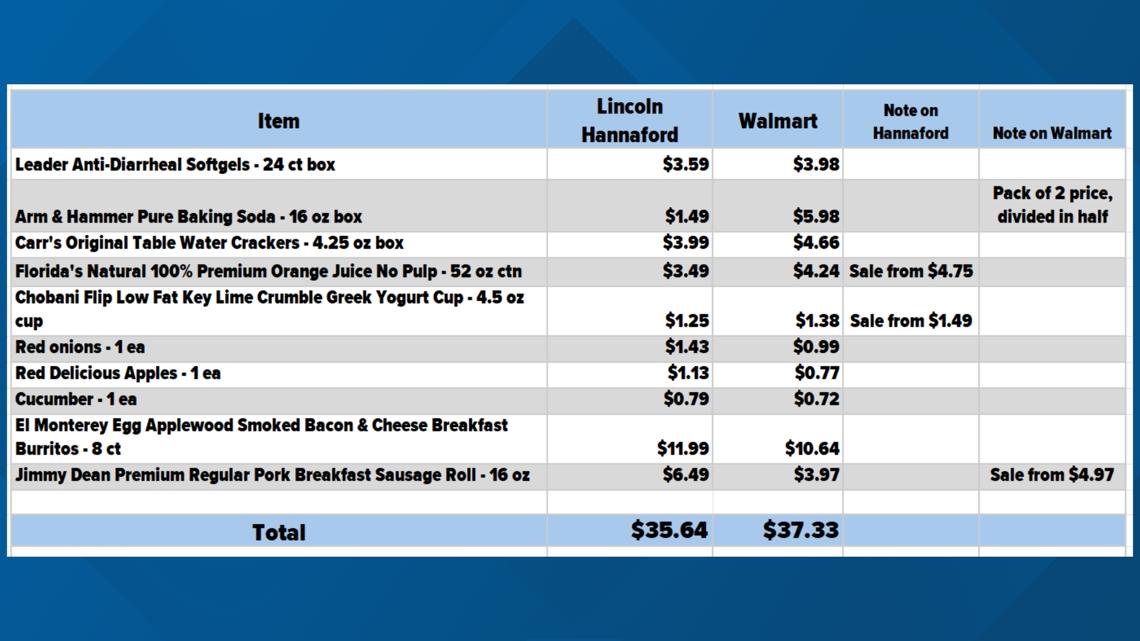
There are three grocery stores in the lakeside community: Hannaford, Walmart, and Steaks N’Stuff. Two of the options are comparable online: Walmart and Hannaford. Using an abbreviated list of grocery items from the report’s list, the regional grocer was marginally cheaper.

Hannaford pushes back on the allegations claiming they are accounting for local income in pricing.
“We do not under any circumstances take a community’s demographics into consideration when setting prices,” said Hannaford in a statement. “Our own analysis indicates that pricing is currently the same for 70 percent of all items sold at our stores in Maine, including such staples as boneless chicken breast, bananas, and avocados.”
The grocer says costs to the company, which include logistics and transportation, play into the cost at checkout.
Warren is skeptical that transportation, regional rent prices, and other factors Hannaford may list are the reason for the price differences.
In 2023, the U.S. Department of Agriculture reported that 3.5 cents of every dollar spent on food comes from transportation. The USDA also reports that from 2020 to 2024, transportation was the fastest rising cost category, increasing 34.4%.
Warren feels the 25% difference between Hannaford stores the report found is intentional.
“Under the light of scrutiny with this report coming out, it should at least give an answer to these communities who feel frustrated that they’re being charged more than their neighbors in other cities,” said Warren.
Hannaford says the distance from the store’s South Portland distribution center and different stores can be considerable. To Falmouth’s storefront, the distance can be less than 11 miles, while the route to Machias is 211 miles one way.
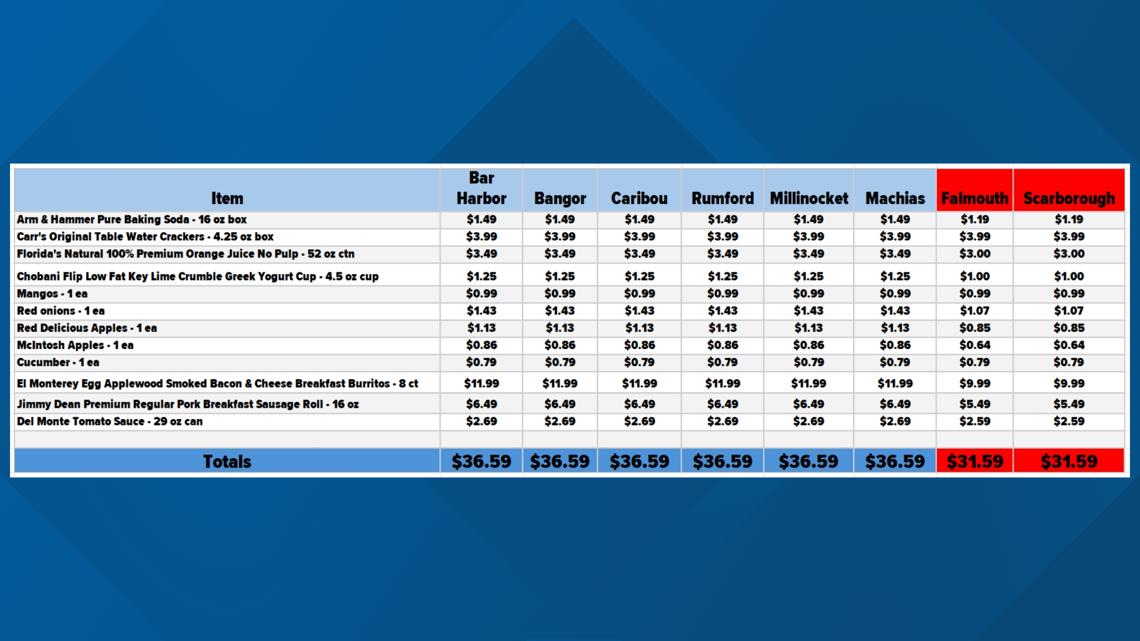
NEWS CENTER Maine compared a selection of goods across four more stores in Bangor, Bar Harbor, Caribou, and Rumford. The Hannaford locations vary in distance from South Portland, socioeconomics, and proximity to major highways.
Based on the selection—derived from the Lincoln sample—all but two locations, in Falmouth and Scarborough, had the same prices.

The New England Consumer Alliance also looks at differences in coupons, noting examples of steeper discounts for items sold in southern Maine compared to the locations located far to the north and east.
Hannaford says store management has the freedom to dictate its own discounts: “each individual store also has the flexibility to adjust an item’s price based on an approaching expiration date or overall inventory of the item.”
With the report published, Warren hopes Hannaford pulls back the curtain on its pricing practices.
“At the very minimum, they can give more information than a few PR sentences and excuses that certainly,” said Warren. “It won’t satisfy the customers who are already stretched thin and feel like, ‘why am I charged 25% more for the same groceries?’”
For more local stories continue with us on our NEWS CENTER Maine+ streaming app.
For the latest breaking news, weather, and traffic alerts, download the NEWS CENTER Maine mobile app.
link